Can you rank for both Local and National SEO?
Local SEO earns visibility in Google’s map pack and location-based results, driven by your Google Business Profile, proximity, reviews, and location pages. National SEO earns organic rankings for queries with no geographic intent, driven by content depth and links from authoritative sites. One website can rank for both when location pages own the geographic intent and service pages plus the blog own the national intent, so no two pages compete for the same searcher.
If the local layer is where your revenue starts, our local SEO services are built to get that layer producing first.
Most business owners who ask me about local SEO vs national SEO are really asking a budget question. They have one website, one marketing budget, and two very different kinds of searchers. Some of those searchers want a plumber who can show up today. Others want the best answer to a question, and they do not care where the author lives.
The honest answer is that you can rank for both, but not by accident. The two types of SEO run on different signals, and they collide when you let them fight over the same page. A hybrid SEO strategy works only when each page knows which audience it serves.
This article explains how each one works, which to fund first, and how to structure a site so both layers pull in the same direction.
What is the difference between local SEO and national SEO?
Local SEO is search engine optimization for queries with local intent. Google decides those queries deserve nearby results, so it shows a map pack, a Maps listing, or organic results filtered by location. National SEO targets queries with no geographic modifier, where Google ranks the best page in the country regardless of where the business sits.
Google is unusually plain about what drives local results. Its own guidance on local ranking says local results are based mainly on relevance, distance, and prominence, and that nobody can pay for a better local ranking.
Distance is the signal national SEO never has to think about. It is also the reason a two-person shop can outrank a national brand for “vegan bakery” in its own neighborhood.
The key differences show up in where the results appear, which signals decide them, and what constrains you.
| Local SEO | National SEO | |
| Goal | Be chosen by nearby customers who are ready to buy or visit | Be the best answer for a topic, anywhere in the country |
| Where results appear | Map pack, Google Maps, localized organic results | Standard organic results, featured snippets, AI Overviews |
| Strongest signals | Primary GBP category, proximity to the searcher, keywords in the business title, physical address in the city, Google ratings (Whitespark 2026 pack factors) | Page depth and quality, inbound link authority, links from industry-relevant domains, internal linking, topical focus |
| Typical query | “emergency plumber Reno” or “dentist near me” | “how to choose a tankless water heater” |
| Who it fits | Businesses with a physical location or a defined service area | E-commerce, SaaS, publishers, remote services, multi-market brands |
| Main constraint | You cannot rank where you are not | Every competitor in the country is competing for the same page |
Whitespark’s 2026 Local Search Ranking Factors survey asked 47 local SEO experts to score 187 factors. For the local pack, they put primary Google Business Profile category and proximity to the searcher at the top. For local organic rankings, the top factor was a dedicated page for each service. Geographic relevance of content and the quality of inbound links came next.
That split tells you most of what you need to know about the two disciplines. The map pack is won mostly on the profile and proximity. Organic rankings, local or national, are won mostly on pages and links, and local organic adds geographic relevance on top.
How does local SEO work?
Local SEO is the process of proving to Google that your business is a real, relevant, well-regarded option near the searcher. Effective local SEO strategies fall into three buckets: the profile, the website, and the reputation. Your online presence in all three has to tell the same story.
Google Business Profile and consistent business information
Your Google Business Profile is the single most important local asset. Google renamed it from Google My Business in November 2021, so ignore any advice still using the old name. Pick the most accurate primary category first. Whitespark’s experts rank it as the top pack factor and an incorrect category as the second most damaging negative factor.
Then fill in hours, attributes, services, and photos. Google says complete and accurate profiles are more likely to appear in local search results.
Next, make your name, address, and phone number match everywhere: website, profile, directory listings, and social accounts. This sounds trivial, but a missing suite number or an old phone number on a local directory creates doubt about which record is correct. Local SEO rewards boring consistency.
Our breakdown of the Google Local 3-Pack explains how the profile and the website work together to earn those three spots.
Can a service-area business without a storefront do local SEO?
Yes, a service-area business without a storefront can do local SEO. Google’s Business Profile guidelines allow businesses that travel to customers, such as plumbers or mobile groomers, to hold a profile with a hidden address and a defined service area. The business must still make in-person contact with customers during stated hours. Whitespark’s 2026 survey does rank a visible address as a pack-ranking advantage, so storefront businesses hold a structural edge.
Local keywords and local content
Local keywords add a place to the intent. “Vegan bakery in Portland” beats “vegan bakery” for a Portland shop. It matches how nearby customers actually search and tells Google which local market you serve. Keyword research for the local layer starts with your own Search Console data, not a national volume tool.
A law firm with offices in Austin and Dallas should have a page for “divorce lawyer in Austin” and another for “real estate attorney in Dallas.” Each page should be written about that office, its people, and its local specifics.
That last part matters. Whitespark ranks a dedicated page for each service first and geographic relevance of content second for local organic rankings. Local content that shows you know the area does the same job for the whole domain. A guide to city permit rules or a post on a neighborhood development both count.
Reviews
Reviews are both a ranking signal and a conversion gate. BrightLocal’s 2026 Local Consumer Review Survey of 1,002 US adults found that 97% of consumers read reviews for local businesses. In the same survey, 47% will not use a business with fewer than 20 reviews, and 74% only care about reviews from the last three months.
High Google ratings sit sixth on Whitespark’s pack factor list, so the same reviews that persuade customers also help you appear in local search results. We go deeper on that link in our post on how positive reviews affect local SEO.
In 2025, White Peak compared 120 Google Business Profiles across four home-service categories in the Reno and Sacramento metros. Profiles with 20 or more text reviews appeared in the map pack for 2.4 times as many tracked queries as same-category profiles with fewer than 20.
Ask for reviews after every completed job and reply to all of them. Keep the flow steady rather than collecting fifty in one month and none for the next six.
How does national SEO work?
National SEO is a fight for a handful of organic positions, featured snippets, and AI citations against every business in the country that sells what you sell. Proximity plays no part, and your profile supports trust and conversion rather than the ranking itself. What decides the outcome is whether your page is the most useful answer and whether enough trusted sites link to it.
The link part has a measurable mechanism. Ahrefs calculates its Keyword Difficulty score from the number of referring domains pointing at the current top ten pages. National commercial queries sit near the top of that scale. The pages already ranking have earned backlinks from dozens or hundreds of domains, and link building is the entry fee.
Our guide to backlink building strategies covers the approaches that still work.
The content part is about depth and topical focus. A national page has to cover the topic more completely than the incumbents and answer the follow-up questions. It also has to sit inside a site that search engines can see is focused on that subject.
Whitespark’s local organic list puts “website’s degree of focus on a specific niche” in its top ten. The same principle applies with more force nationally.
National SEO strategies also tend to be slower to pay back. There are no primary studies that pin down a timeline, and I would be skeptical of any agency that quotes one, but the mechanics explain the lag. You are earning links and topical authority that compound, and compounding starts small.
Can a business rank for both local and national searches?
Yes, and for many businesses it is the only sensible plan. Local and national SEO are not rivals competing for the same budget line. They are two layers that feed each other when the site is structured to keep them apart.
The mechanism runs both ways. National content earns links and brand searches, which build the prominence Google says it weighs in local results. Local trust runs the other direction. A business with strong ratings and a complete profile converts national visitors at a higher rate, because the proof sits right there in the search results.
The order matters, though. For most businesses with a physical location, the local layer produces revenue sooner and funds the national layer.
In 2025, we ran a matched analysis of 40 single-location service businesses over 12 months. Businesses were paired by industry, market competitiveness, starting visibility, and monthly spend. Within each pair, the local-first site was compared with the site that led with national content. The local-first group reached sustained month-over-month lead growth in a median of four months, versus eleven for the national-first group.
For a local service business, I usually want the local layer producing leads before we ask national content to absorb a large share of the budget. Until the map pack is paying its way, national content is a savings account you are funding with money you do not have yet.
~Tim Woda, White Peak Marketing
Which should you focus on first?
Three questions settle this for almost every business I talk to.
Where does the revenue come from? If most of your customers are inside a drivable radius, focus on local SEO first. If customers are spread across the country, or you ship or deliver remotely, national is your primary layer.
Are you eligible for a Google Business Profile? Google requires in-person contact with customers during stated hours, at your place or theirs. Eligible businesses get the map pack. Ineligible businesses, like most SaaS companies and pure e-commerce brands, compete only in organic results, which makes national tactics unavoidable.
Can you support a real page for every real location? If each location has its own address, hours, staff, and proof, build location pages. If you have one office and a wish list of cities, keep one strong service page with a local section and skip the city pages.
| Your answers | Your lane | First 90 days |
| Local revenue, GBP-eligible, one location | Local-first | Profile completeness, review flow, one strong service page per service, consistent NAP across directories |
| Spread-out revenue, not GBP-eligible | National-first | Topic clusters, one authoritative page per product or service, link earning through original content |
| Local revenue in several markets, or local plus online sales | Two-layer | Local-first work per location, then national informational content that links to the local hubs |
How do you structure a site to rank for both without cannibalization?
Two pages can rank for the same query without harm. Cannibalization becomes a problem when several of your pages compete for substantially the same search intent, and that overlap weakens or destabilizes the page you actually want to rank.
In local and national SEO the usual culprit is a main service page and a city page that both say “emergency plumbing.” They trade positions month to month, and neither builds authority.
In Q1 & Q2 of 2026, White Peak audited 60 websites targeting both a national service term and at least one city variant. On 38% of them, a service page and a location page swapped rankings for the same query within a 90-day window. Those swapping pages averaged 2.1 positions lower than the comparison group: queries on the same sites where one page held the ranking for the full 90 days.
The fix is an ownership rule. Every query type gets exactly one page type that owns it.
| Page type | Owns this intent | Example query | Signals it depends on | Mistake that breaks it |
| Service page | What you do, how, at what quality and price | “tankless water heater installation” | Depth, internal links, industry links, topical focus | Stuffing city names into it so it competes with location pages |
| Location page | Where you do it, for whom, with what local proof | “water heater installation Sparks NV” | Local content, crawlable NAP, reviews, links from local sources | Templated copy that only swaps the city name |
| Blog and guides | Questions, comparisons, decisions | “tankless vs tank water heater cost” | Content quality, links, freshness, structure | Publishing generic posts that do not link back to the service or location hubs |
| Google Business Profile | Immediate local intent, “near me” | “plumber near me” | Category, proximity, ratings, hours, photos | Wrong primary category, inconsistent hours, no review responses |
The location-page row carries a compliance boundary. Google’s spam policies define doorway abuse as pages created to rank for specific, similar queries that lead users to less useful intermediate pages. A page for every city you would like to rank in, with the same copy and a changed city name, is exactly that.
Search Engine Land’s 2026 guidance on multi-location architecture puts it well. Build the smallest number of pages necessary to accurately represent the business. Then make those pages as useful and connected as possible.
A city page that only changes the city name is a doorway page, not a location page. If you cannot name the people, the address, and the local proof, you do not have a location. You have a keyword.
~Tim Woda, White Peak Marketing
Launching the second layer on an existing site is a sequence, not a checklist. The order below prevents the most common collision.
Export your Google Search Console queries by page and mark every query that has two or more of your pages ranking for it. Those are your cannibalization candidates.
Assign one owner per query type using the table above. Decide, in writing, which page owns “what” and which owns “where.”
Rewrite title tags, H1s, and internal anchor text so each page describes only the intent it owns. Point the national pages at the local hubs and the local pages at the service pages.
Build location pages only for real locations with real proof, and prune or merge city pages that fail that test.
Track rankings and leads by page type rather than by keyword alone, so you can see whether the local layer and the national layer are both moving.
What changed in 2026: AI Overviews and zero-click local searches
Ranking well no longer guarantees a click. SparkToro’s 2026 analysis of Similarweb clickstream data found that 68% of US Google searches ended without a click in the first four months of the year. When AI Overviews appear, they cut click-through rates by nearly 60%.
Local queries are not exempt. A Whitespark study reported by Search Engine Journal found AI Overviews on 68% of local searches, versus map packs on 39% of the same queries.
The two systems also pick different winners. A June 2026 study by Local SEO Data covered 1,120 searches across seven verticals and 13 US cities. It found that 28.5% of businesses in the map pack did not appear in Google’s AI Mode for the same query.
Consumers are moving too. BrightLocal’s 2026 consumer survey found that 45% used ChatGPT or another AI tool for local recommendations in 2026, up from 6% the year before.
For a local business, this changes the scorecard more than the tactics. Rio SEO’s 2026 report on more than 239,000 US enterprise locations found website clicks from listings fell 7.7% in 2025. Direction requests rose 6.4% over the same period. Customers are still acting; they are acting from the listing instead of your site.
If you measure a local campaign only in website sessions, you will conclude it is failing while the phone keeps ringing.
Do AI Overviews show local businesses?
AI Overviews do show local businesses, but they select them differently from the map pack. Whitespark’s 2026 survey ranks presence on expert-curated “best of” lists, a dedicated page for each service, and prominence on industry-relevant sites as the top factors for AI search visibility. Local SEO Data’s 2026 study found 28.5% of map pack businesses were absent from Google AI Mode for the same query, so track both surfaces separately.
Shared foundations: mobile speed and structured data
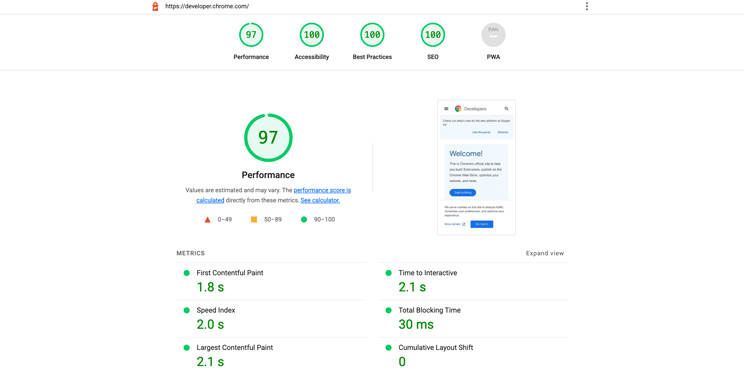
Both layers sit on the same technical base, and two updates to the old advice are overdue. Google retired its Mobile-Friendly Test on December 1, 2023. Use PageSpeed Insights and the Core Web Vitals report in Search Console instead.
Speed still matters for the local searcher on a sidewalk and the national researcher comparing five tabs. We cover the evidence in our post on whether website speed matters.
Structured data is the other shared foundation, and Google’s documentation is narrower than most SEO copy suggests. Its LocalBusiness structured data guide covers hours, departments, and other details that can appear in a knowledge panel or business carousel. It does not describe schema as a link between your site and your Business Profile. That connection is set inside the profile itself.
Validate whatever you deploy with the Rich Results Test. If schema is new to you, start with our explainer on what schema markup is.
Then choose types by what each page actually is. A real location page fits a LocalBusiness subtype such as Plumber or Dentist. A service page can carry schema.org Service markup to describe the offering and its area served. Google shows no rich result for Service, so its value is entity clarity rather than a search feature. Product markup belongs only on pages that sell a specific item with a price and availability.
Where White Peak fits
White Peak is a Reno-based team that builds both layers, usually (but not always) local first, followed by national. We start with the profile, the reviews, and the service pages that produce local leads. Then we add national content and link-earning that compounds on top.
If you want a second opinion on which lane is right for your business, contact us for a free consultation and bring your Search Console data. We will tell you where the two layers are colliding and which one should move first.