Quick Answer
The ecommerce innovations worth using now remove a step between interest and purchase. For most stores that means AI shopping and search visibility, accelerated checkout, smarter personalization, shoppable social content, and faster delivery or local pickup. Start with checkout and product data, because they help every sale. Save flashier tools for after the basics work.
The stakes keep rising: the U.S. Census Bureau reports ecommerce was 17.1 percent of total retail sales in the second quarter of 2026.
Most new ecommerce tools are pitched as must-haves. Most small stores can’t use half of them well, and shouldn’t try.
Ecommerce innovation only matters when it fixes a real leak in your store. The rest is noise, however exciting the demo looks.
What counts as an innovation worth using
An innovation is worth your money when it does one of three jobs. It helps shoppers find you, it makes buying easier, or it brings customers back for a second order.
That maps onto three stages: visibility, conversion, and monetization. Visibility gets you found. Conversion turns a visit into a sale. Monetization is the stage after the first sale, where repeat orders and higher order values live.
Use those stages as a filter for any ecommerce business, large or small. If a new tool doesn’t clearly help one of them, it’s a distraction. If it helps a stage where your store is already strong, it’s a lower priority than fixing the weak one.
Checkout is the clearest example. Baymard Institute’s research puts the average documented cart abandonment rate at 70.22 percent, based on 50 studies. That means most shoppers who add something to a cart still leave without buying.
Key Takeaways
Getting value from ecommerce innovation comes down to:
- Fix the leak first: A faster checkout beats a new feature that brings more shoppers to a broken one.
- Product data is the new storefront: AI shopping tools can only recommend products they understand.
- Small stores win on speed: Local pickup and quick replies are innovations big retailers struggle to match.
- Test before you commit: Run each new tool on a slice of traffic and keep only what earns its cost.
The innovations worth your attention
These are the ecommerce innovations we’d look at first for a small or mid-sized store. Each one includes what it is, why it matters, and the catch.
1. AI shopping assistants and agentic checkout
Artificial intelligence now sits inside the shopping experience itself. AI search tools help shoppers compare products in natural language, track prices, and even buy. Google’s agentic checkout announcement says the feature is rolling out on Search, including AI Mode, "from eligible merchants in the U.S."
Google named Wayfair, Chewy, Quince, and select Shopify merchants among the first. That’s an early signal of where shopping is heading. Shoppers may soon complete a purchase without ever seeing your homepage.
The catch is that AI tools rely on your product data. Titles, descriptions, prices, stock levels, and images need to be complete and accurate in your store and your product feeds.
2. AI search visibility for product pages
AI search is the answers that tools like ChatGPT and Google’s AI summaries give. Shoppers ask them questions such as which running shoes suit flat feet, and the tools cite products and pages.
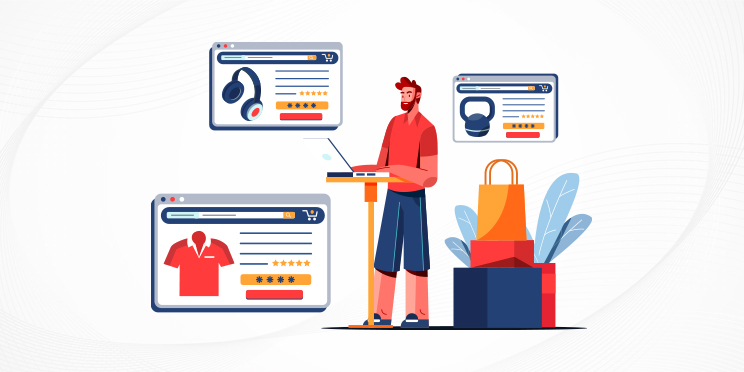
Pages that answer real buying questions clearly are easier for these tools to quote. That means plain product descriptions, sizing details, comparison tables, and honest FAQs. Those same pages are the starting point for ecommerce AI search optimization.
3. Accelerated checkout
Accelerated checkout lets returning shoppers pay with saved details in a tap or two. Shop Pay, Apple Pay, and Google Pay are common options on Shopify stores.

Shopify says Shop Pay "lifts conversion by up to 50% compared to guest checkout" in its Shop Pay checkout article. Shopify sells Shop Pay, so read the number that way, but the direction is clear. Fewer form fields mean fewer abandoned carts.
4. Personalization and product discovery
Personalization ranges from simple to complex. At the simple end are recently viewed items, order history, and emails that use a customer’s name. At the complex end are recommendation engines that learn from browsing behavior.
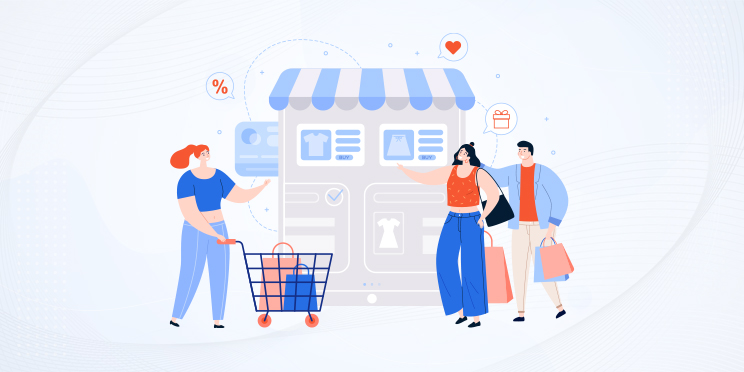
The simple versions pay off for most stores. Complex engines need a large catalog and plenty of traffic before their personalized product recommendations beat a well-chosen list of items customers also bought.
5. Shoppable social content
Shoppers increasingly discover products in social feeds, where posts and short clips can link straight to a product page or in-app checkout. Social commerce now runs through several major platforms, including TikTok, with shopping features built into the app.
The catch is effort. Shoppable content needs a steady flow of posts and a synced product catalog. Start with one platform where your customers already spend time, and connect your catalog properly before posting.
6. AI chat and support assistants
Chat assistants have improved a lot. Good ones answer order status, sizing, and shipping questions instantly and hand off to a person when they can’t help.

Bad ones trap customers in loops. Set clear limits, train the assistant on your real policies, and make the route to a human obvious.
7. Fast delivery and local pickup
Speed of delivery shapes buying decisions, and big retailers have set high expectations. Small stores can compete in a different way: local pickup and local delivery. That’s a real competitive advantage, because large online retailers can’t hand over an order across the counter an hour after it’s placed.
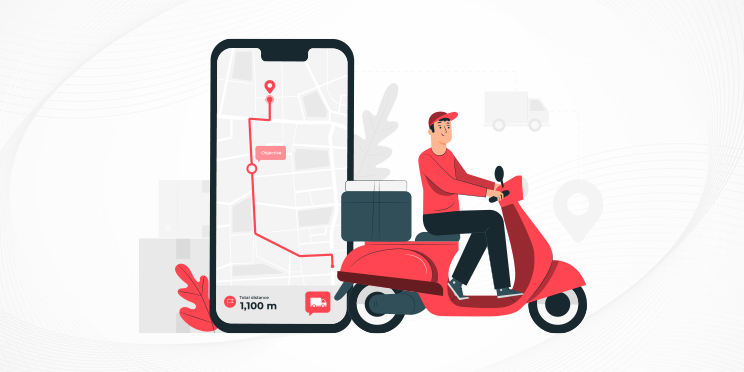
Shopify’s pickup in store feature lets customers collect online orders at your retail location. For a store with a physical shop, that’s a same-day option with no shipping cost. It also brings online shoppers in-store, where they often find something else to buy.
8. Mobile features and augmented reality
Mobile shopping is now the default, not an innovation. A store that works poorly on mobile devices loses sales before any new tool can help. A dedicated mobile app only makes sense once the mobile site works well and you have loyal repeat buyers.
Augmented reality lets shoppers preview products in their own space through a phone camera. It suits furniture, decor, and eyewear well, and adds little for most other products.
9. Location-based ads and offers
Location targeting lets you change ads and offers based on where a shopper is. A store can promote local pickup to nearby shoppers and free shipping to everyone else.

It’s most useful for stores with a physical location or regional delivery. For national stores, it helps tailor messages by climate, season, or local events.
The best ecommerce innovation for most small stores isn’t new at all. It’s a checkout that doesn’t make people work.
Innovation behind the scenes
Not every useful innovation is visible to shoppers. Some of the biggest gains come from tools that automate routine work and give you better information.
Inventory tools now connect your store, marketplaces, and warehouse so stock counts stay accurate everywhere. That prevents the worst customer experience in ecommerce: selling something you don’t have. For stores with a supply chain that spans several suppliers, low-stock alerts and reorder reminders save hours each week.
Analytics has improved too. Most platforms now show sales by channel, product, and customer type without extra software. The innovation isn’t the dashboard. It’s the habit of checking it weekly and acting on what you see.
AI-driven tools can also draft product descriptions, tag images, and summarize customer reviews. They’re useful for a first draft, but a person still needs to check facts like sizes, materials, and care instructions. Wrong details lead to returns.
Email and text automation round this out. Abandoned cart reminders, post-purchase follow-ups, and restock alerts run on their own once set up. They’re among the least glamorous ecommerce tools, and among the most reliable for the monetization stage.
Which innovations fit a small store
Not every innovation suits every store. This table sorts them by what they need and who they suit.
| Innovation | Stage it helps | What it needs | Best fit |
|---|---|---|---|
| Accelerated checkout | Conversion | A few settings in your platform | Every store |
| Clean product data | Visibility | Time to fix titles, descriptions, and feeds | Every store |
| AI search visibility | Visibility | Clear product pages and FAQs | Stores with comparison-heavy products |
| Simple personalization | Monetization | Email platform and order history | Stores with repeat buyers |
| Local pickup | Conversion | A physical location | Stores with a shop or warehouse |
| Shoppable social content | Visibility | Regular posting and a synced catalog | Visual products |
| AI chat assistant | Conversion | Accurate policies and setup time | Stores with many support questions |
| Augmented reality | Conversion | 3D models of products | Furniture, decor, eyewear |
Start at the top of the table. The first two rows help every store and cost little beyond time. Work down only once those are solid.
Now ask yourself: where do most shoppers leave your store today, before the cart, at checkout, or after the first order?
How to test a new ecommerce tool
New tools are easy to install and hard to judge. A simple test keeps you from paying for features that don’t pay for themselves.
- Write down the one number the tool should change, such as checkout completion or repeat orders.
- Record that number for the four weeks before you install anything.
- Turn the tool on, ideally for part of your traffic if the tool allows it.
- Run it for at least four weeks, so a single busy weekend doesn’t skew the result.
- Compare the before and after numbers, and check that nothing else changed in the same period.
- Keep the tool only if the gain covers its cost, including the time it takes to run.
Apps also add code to your store, which can slow pages down. Check page speed before and after each install, and remove apps you’re no longer using.
Common mistakes with ecommerce innovation
The most common mistake is adding tools before fixing basics. A recommendation engine can’t help if product pages are thin and checkout is slow.
The second is chasing every trend at once. Each tool needs setup, content, and monitoring.
Three tools run well beat ten run badly.
The third is ignoring data quality. AI shopping tools, marketplaces, and ad platforms all read your product feed. Missing sizes, vague titles, and outdated stock counts hurt you in all of them at once.
The fourth is skipping measurement. Without tracking, you can’t tell which innovation paid off. Before adding anything, make sure your store reports sales by channel, which starts when you connect Shopify to Facebook and Google with proper conversion tracking.
Next step for your store
Pick one stage to improve this quarter. For most stores, that’s conversion, starting with checkout and product pages.
Work through the user experience the way a customer would. Search for a product, open its page on a phone, add it to the cart, and check out. Every pause, extra field, or confusing label is something to optimize before adding new tools.
Then look at what happens after the sale. Customer satisfaction drives repeat orders, and repeat orders are where online store profits build. A clear delivery update and an easy return process do more for the second order than any discount.
If your store’s theme makes these changes hard, the platform may be holding you back. A custom Shopify theme can add the sections and speed a stock theme can’t, though it isn’t the right call for every store.
Ecommerce innovation FAQs
What is the biggest ecommerce innovation right now?
AI shopping is the biggest shift right now. Search tools can compare products, track prices, and, in some cases, complete checkout for the shopper. For store owners, the practical step is clean, complete product data, because AI tools can only recommend products they understand.
Are ecommerce innovations worth it for small businesses?
Some are and some aren’t. Accelerated checkout, clean product data, and local pickup help almost any small store at low cost. Complex recommendation engines and augmented reality usually need more traffic or the right product type before they pay off.
How do I know if a new ecommerce tool is working?
Pick one number the tool should improve, record it before installing, and compare it after at least four weeks. Check that nothing else changed in that period. Keep the tool only if the gain covers its cost, including the time needed to run it.
Does shoppable social content work for every store?
Shoppable social content works best for visual products that people enjoy browsing, such as fashion, decor, and beauty. It needs regular posting and a synced catalog. Stores selling technical or low-interest products often get more from search and email.
Getting help in Reno
If you take one thing from this, fix the leak in your store before you buy the next shiny tool.
White Peak is a web design and digital marketing agency in downtown Reno. We build and improve online stores for businesses in Reno, Sparks, Carson City, Truckee, and nationwide.
If you’re deciding which changes to make first, our ecommerce website design team will help you choose in a free consultation.